Four Stories of St Anthony Abbot
1340/1345
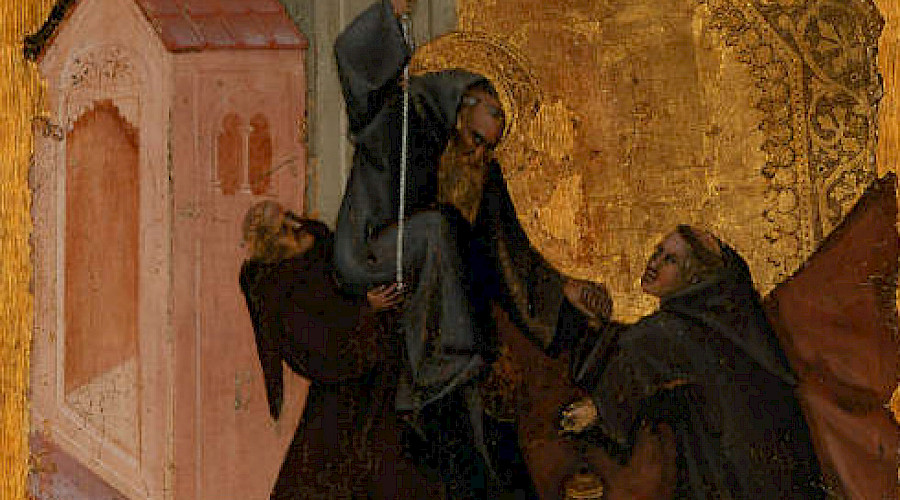
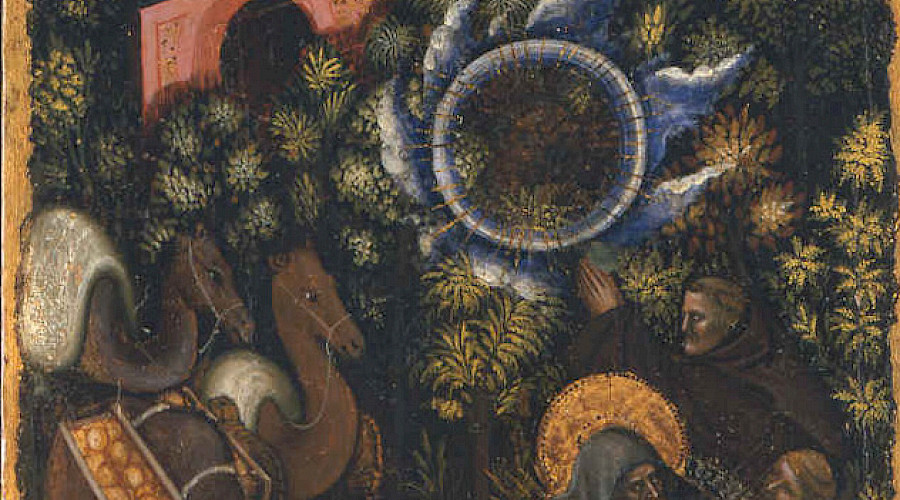
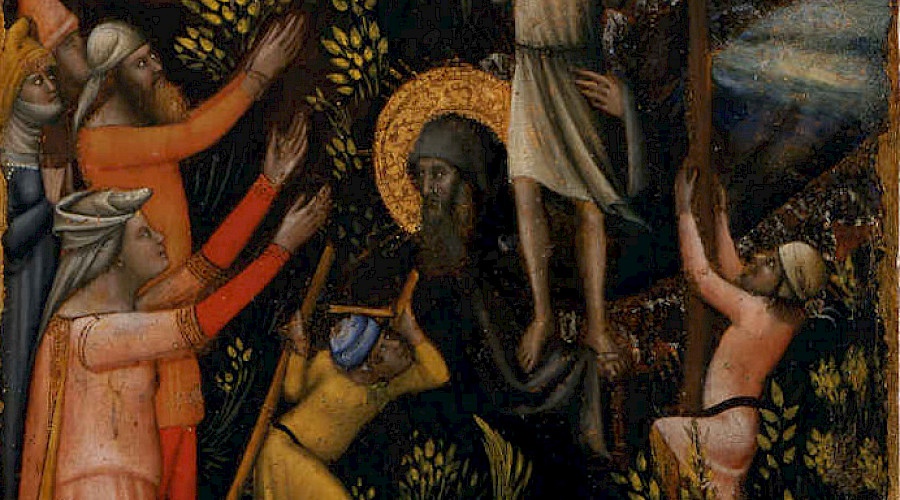
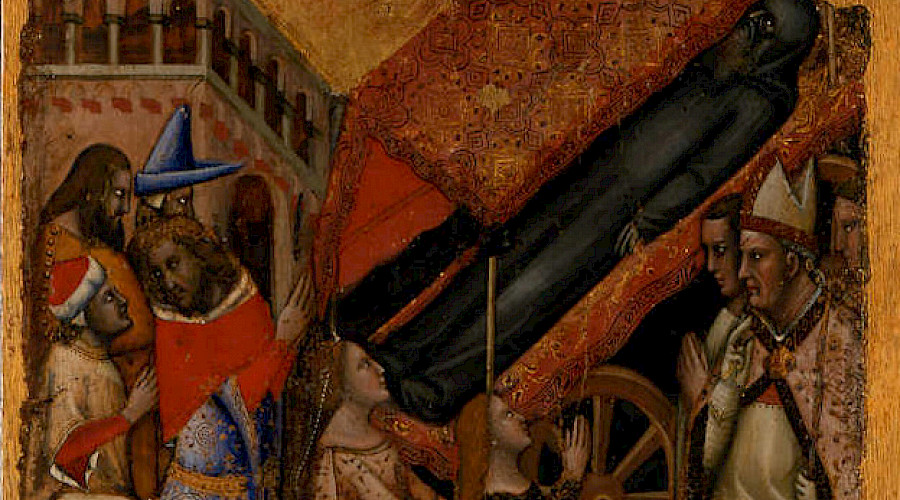
In the Stories of St Anthony Abbot, Vitale’s painting, “rather than being conclude within the frame of the work, as it happens almost invariably in the finely calibrated art of the Tuscans, Vitale’s painting overflows onto the decorative bands of the gilded backgrounds...
The action remains open, then, like a slice of life that is suddenly detached from an ongoing existential context, as with the turning of a page or the clicking of a camera shutter. The space of the work opens up to the existential space of real life and of the viewer, conferring on Vitale da Bologna’s incomparable art a final signification of living, breathing, complex and pulsating ‘expression’”.
For the first story, Arcangeli refers to a comment by Roberto Longhi, who had already detected “movements of a descriptive liveliness that cannot be found in Tuscan art”, and then states: “Only the profoundly modern taste of Longhi, steeped in the expressionism of our century, could make us receptive to appreciating these masterpieces. Just think of the contradictions in this and the other paintings: a highly vertical, hyper-Gothic space overlying the two stories and an admirable tonal stillness in the upper part, like a 14th-century Morandi; abrupt rhythms and a soft, living penumbra, a truly proto-Impressionist woodland”.
In the second story, Arcangeli dwells on the colour and the “admirable blue gleam of the miraculous winged wheel [which] is a powerfully expressive chromatic climax”.