Probatic Pool
1595/1596
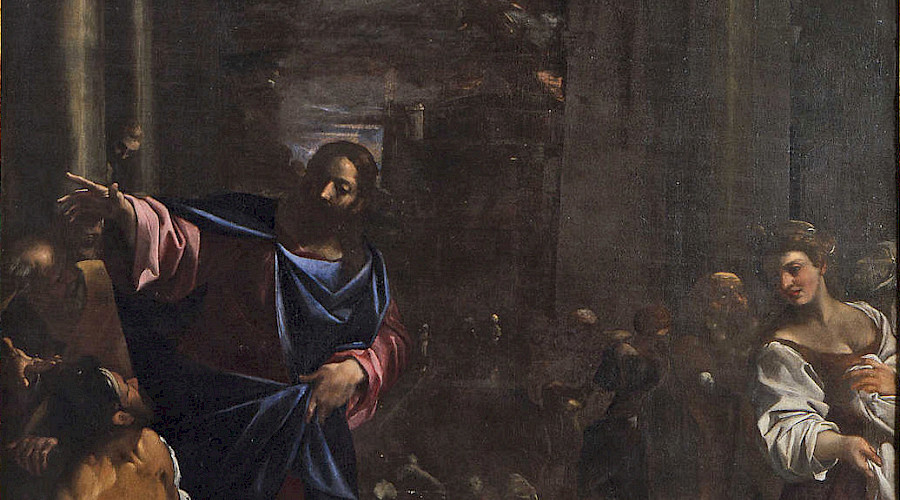
Christ at the Probatic Pool and other works are from the phase “of a style that could be called proto-Baroque, if several elements did not stand in the way. The first is a physical grasp of the body ... which, with its distant Emilian roots, negates the continuous and untroubled flow of the space, cluttering it instead with the weight of its existence.
The second is a natural and sentimental use of light and shadow, inestimably described by Longhi as ‘of meteorological sense’; as if, rather than having a gilded, optimistic, Olympian light” as it would in the Baroque, “the canvas were obscured by crepuscular veils, by restless stormy flashes, by sad autumn or cold winter light”.
In the painting there is “a ‘visionary’ intensity; in the sense of distance, achieved with the luminous touches of the ‘macchiette’ or dabs, suspended between an echo of perspective and a free spatiality that was already 17th-century in conception; in the luminous cry of the diving angel; in the drama – coruscating to the point of anguish, and yet silent and distant – of the sky in the final moment of the sunset”.